In this article, we explain in detail how to finance Knock Down Rebuild House and What it really costs? So, If you love your street but you have fallen out of love with your house, you are far from alone. I meet plenty of clients in exactly that spot. They have got a great block in a suburb they never plan to leave. Good schools, an easy run into the city, neighbours they actually like. But the house itself has had its day. It is too small, too dated, or it just does not suit how they live now. That is usually the point where a knock down rebuild enters the conversation.
The idea can sound like a big undertaking. Demolition, permits, a construction site where your lounge room used to be. But once you understand the process, and how the finance works, it all gets a lot more manageable. A knock down rebuild is often a smart way to get a brand new home. Best part, you keep the location you already love.
I put this guide together to walk you through the basics. What a knock down rebuild actually involves. What it tends to cost. How the loan side works. That way you can plan properly before you fall in love with a floor plan.
What is a knock down rebuild house?
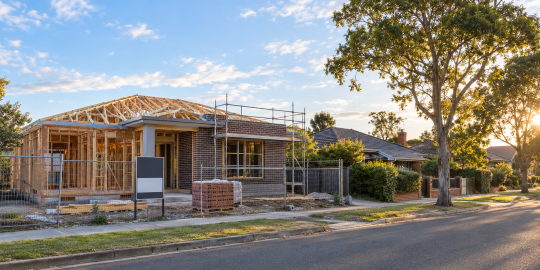
A knock down rebuild, often shortened to KDR, is exactly what it sounds like. You demolish the existing house on your block. Then you build a brand new home in its place. The land stays yours the whole time. You are not buying a new block or moving suburbs. You are simply starting fresh on the one you already own.
It is different from a renovation. You are not working around an existing structure, you get a clean slate. That means a home that actually fits how your family lives today, rather than a patched together floor plan from decades ago. It is also different from buying vacant land and building. You already hold the land, and that changes the whole finance conversation. More on that shortly.
Is a knock down rebuild house the right move for you?
There is no single answer here. It comes down to your block, your budget, and what you are trying to achieve. A few signs it might be worth exploring:
- Your block is in a location you are not willing to give up, but the house does not work anymore
- Renovating would cost close to, or more than, building new once you add up the structural work
- The house has real issues, think poor insulation, an outdated layout, or a footprint that does not suit the block
- You want the certainty of a new build, current energy standards, and builder warranties
- You have built up solid equity in your existing property
If most of these sound familiar, it is worth getting a proper feasibility check before you commit to anything.
The knock down rebuild process, step by step
Every Knock Down Rebuild House project is a different, depending on your council and your block. But the general path looks like this.
Feasibility and site check. Before you fall for a design, get clear on what your block can actually support. Zoning, easements, overlays, slope, and soil quality all affect what you can build and what it will cost. A quick call to your local council planning team is a good place to start.
Design and builder selection. You will work with a builder or designer on a floor plan. One that suits your block and your budget. Take your time here. Visit display homes, check reviews, and get a proper written quote rather than a rough estimate.
Council approvals. You may need a planning permit for the new home, a building permit, and a separate demolition permit. Some established suburbs also require an asset protection permit before any site works begin. This records the condition of nearby kerbs, footpaths, and nature strips. Approval timeframes vary a lot between councils, so build some buffer into your timeline.
Demolition. Once permits are sorted, the existing house comes down. Older homes, particularly anything built before the 1990s, often need an asbestos assessment first. Best to factor this in early rather than treat it as a surprise.
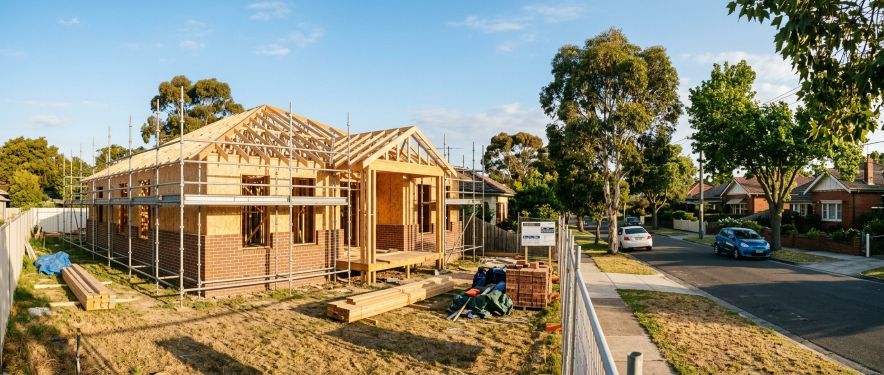
Construction. This is the longest and most tiring period while you await your dream home gets build. Your builder works through the standard stages: base, frame, lock up, fit out, and completion. This is also how your construction loan releases funds. More on that in the next section.
Handover and settlement. A final inspection, then the keys are yours. Your new home is officially complete.
Most knock down rebuild projects take somewhere between twelve and eighteen months. That is from the first feasibility check through to handover. The exact timing shifts depending on council processing times, weather, and how busy your builder is.
Now the tricky part! How the finance actually works?
This is where a knock down rebuild differs the most from a standard home purchase. It is also where a broker earns their keep.
You cannot use a standard home loan. The funds get released in stages, not as one lump sum. So a knock down rebuild is financed through a construction loan, not a regular mortgage.
Your land equity does a lot of the heavy lifting. Lenders value your block based on the land itself, separate from the house about to be demolished. Say your current property is worth $1.1 million, and the existing house makes up around $100,000 of that. The lender will treat your land value as roughly $1 million. If you have owned the property for a while, that equity can often cover a large chunk of the rebuild. Sometimes all of it.
Funds are released in progress payments. Your lender pays your builder at each construction stage as work is completed, rather than handing over the full amount upfront. You generally only pay interest on what has actually been drawn down. That helps keep repayments manageable while you are also covering rent or another mortgage during the build.
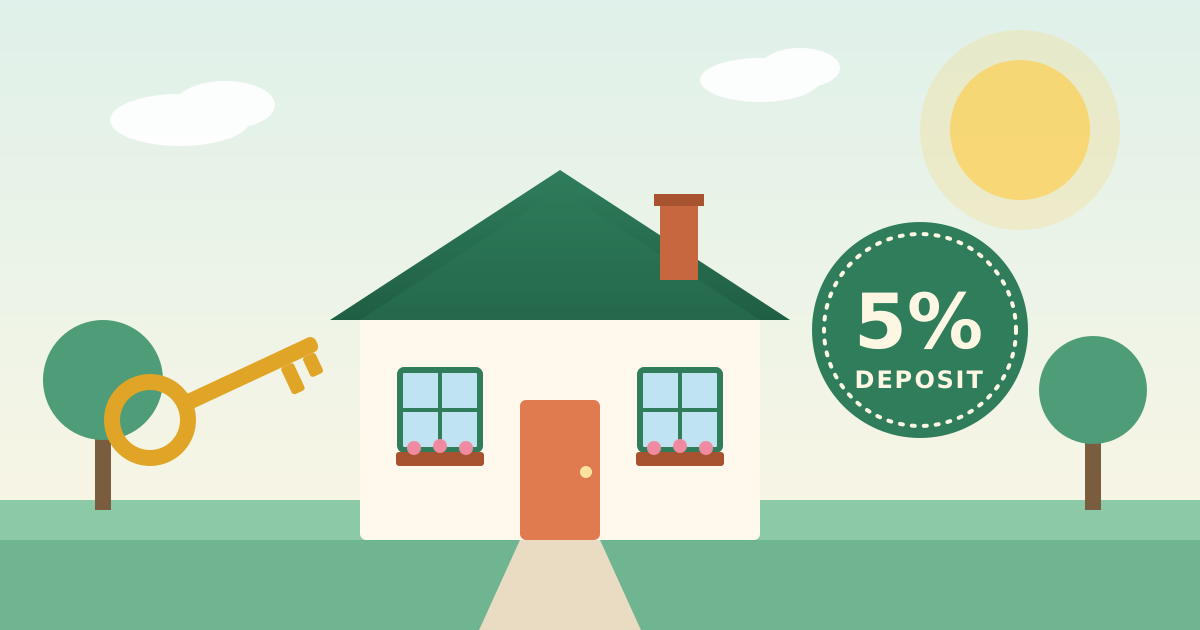
Deposit requirements vary. Most lenders want somewhere between 5 and 20% of the combined land and construction value. Your existing equity often covers this, so some clients do not need extra cash at all. The exact figure depends on your borrowing capacity, credit history, and the lender’s policy at the time. Worth confirming directly rather than assuming.
A signed building contract comes first. Lenders will not release funds against a rough estimate. You need a fixed price building contract and council approved plans in hand before the construction loan is finalised. Factor this timing into your budget.
Bridging finance is an option if you need to move out. Still holding your existing mortgage and relocating during the build? Bridging finance can cover the gap. It carries you until your new home is complete and your loan converts to a standard mortgage.
Government grants rarely apply. Most first home owner grants and new home concessions are designed for buyers who do not already own property. A knock down rebuild usually will not qualify. There are occasionally other state based concessions worth checking, but do not bank on a grant covering part of your build without confirming eligibility first.
Every lender treats knock down rebuild applications a little differently. Deposit requirements, interest only periods during the build, offset and redraw once the loan converts, it all varies. This is exactly the kind of detail where comparing options across a lender panel, rather than sticking with a single bank, makes a real difference to your outcome.
Costs beyond the building contract
The building contract is rarely the full picture. Make sure your budget also covers:
- Demolition, including any asbestos removal if your existing home needs it
- Council fees for permits and any required inspections
- Site costs such as earthworks, retaining walls, drainage, and connecting services, these vary a lot depending on your block
- Temporary accommodation or rent if you are moving out during the build
- Landscaping, fencing, driveways, and window coverings, often not included in a standard build price
- A contingency buffer for the unexpected, I generally suggest holding back around 10% of your build budget
Ask your builder for an itemised site costs breakdown, not a single lump figure. It is one of the easiest ways to avoid a nasty surprise partway through the project.
Common mistakes that I see clients make!
Falling in love with a design before checking the block. Get your feasibility and council checks done first. A stunning floor plan means nothing if your block cannot support it.
Underestimating the soft costs. Demolition, permits, and temporary accommodation add up fast. Clients who only budget for the build contract often get caught out.
Assuming their current equity is enough without confirming it. Equity calculations exclude the value of the house you are about to knock down. The number is often smaller than expected.
Skipping proper advice on loan structure. The wrong structure can mean paying more interest than necessary during the build. Or running into cash flow trouble if you are covering rent and repayments at the same time.
A knock down rebuild involves more moving parts than a typical home purchase. Council approvals, demolition timing, staged construction, a loan that needs to match your build schedule exactly. My job is to sit across all of that with you. I compare construction loan options across a wide panel of lenders. I structure your finance around your equity and your builder’s payment schedule. And I manage the paperwork, so you are not chasing forms while you are also managing a build.
If you are weighing up whether to renovate, move, or knock down and start fresh, I am happy to run the numbers with you. Before you spend a dollar on plans.
A knock down rebuild is one of the best ways to get a brand new home without leaving the suburb, school zone, or street you already love. Getting the finance structured properly from the start makes the whole project easier to manage.
Get in touch and I will walk you through what your equity can support, and how a construction loan would work for your block.
Lets talk it through directly, get in touch and we will map out what you are actually eligible for.
Quick questions my clients always ask me
Can I live in the house while I sort out plans and permits? Usually yes. You only need to move out once demolition is scheduled.
Do I need to sell my current home to fund a rebuild? Not usually. Most clients fund a knock down rebuild through equity in the existing property plus a construction loan. No sale required.
What happens if building costs go over budget? Talk to your builder and broker early. Options include using savings, adjusting the scope, or arranging additional finance. Much easier to manage if you flag it early, rather than partway through the build.
How long does the whole process take? Plan for somewhere between twelve and eighteen months, from your first feasibility check to getting the keys. This depends on your council and builder.
Is a knock down rebuild cheaper than moving? Sometimes. Especially once you factor in stamp duty on a new purchase, agent fees, and the cost of buying in a similar location. It really comes down to your own numbers, worth working through properly rather than guessing.
Contact Us
We would love to speak with you.
Feel free to reach out using the below details.
Our Office
44 Lakeview Drive
Scoresby, VIC, 3179
0403 323 436
Visit Us
Address:
44 Lakeview Drive Scoresby, VIC, 3179